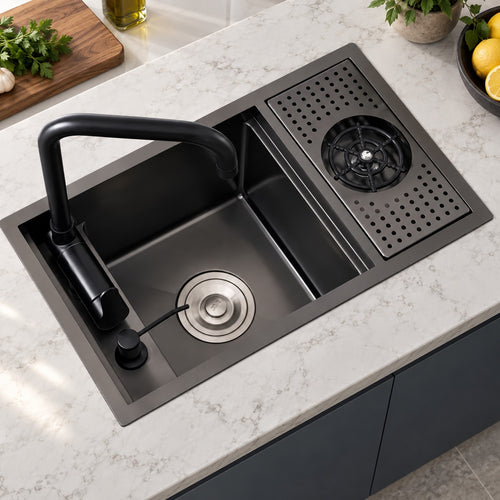
Stop the Drip: Your Guide to Fixing a Leaky Faucet
Stop the Drip: Your Guide to Fixing a Leaky Faucet Tired of the Drip, Drip, Drip? How to Fix a Leaky Faucet Easily That constant dripping sound from your faucet can be more than just annoying; it can also waste a surprising amount of water and add to your water bill. Luckily, fixing a leaky […]

Tired of the Drip, Drip, Drip? How to Fix a Leaky Faucet Easily
That constant dripping sound from your faucet can be more than just annoying; it can also waste a surprising amount of water and add to your water bill. Luckily, fixing a leaky faucet is often a simple DIY project that can save you money and give you some peace and quiet. This guide will walk you through the steps to diagnose and repair a common leaky faucet, empowering you to tackle the problem yourself.
Gathering Your Supplies: What You’ll Need
Before you start, gather the right tools and materials. Having everything ready makes the repair process much smoother. Here’s a basic list of what you’ll likely need:
- Screwdrivers: A Phillips head screwdriver and a flathead screwdriver are essential for removing screws.
- Adjustable Wrench or Pliers: These are useful for loosening and tightening nuts and other components.
- Penetrating Oil (like WD-40): Sometimes, parts can be stuck. Penetrating oil helps loosen them.
- Replacement Parts: This is crucial. You’ll likely need new O-rings, washers, or a cartridge. More on this later.
- A Towel and Bucket: To catch any drips or spills.
- Gloves (Optional): To keep your hands clean.
- Flashlight: For better visibility in tight spaces.
- Vinegar (Optional): For cleaning mineral buildup.
Identifying Your Faucet Type
Knowing your faucet type will help you identify which parts need replacing. There are a few common types of faucets, and each has its own unique design. Identifying your faucet type is the first step in understanding how to fix a leaky faucet.
- Compression Faucets: These are the older style faucets with separate hot and cold handles. They use a rubber washer that presses against a valve seat to stop the flow of water. These are less common now but still found in some homes.
- Cartridge Faucets: These faucets have a single handle that moves up and down for flow and side to side for temperature. They use a cartridge to control water flow.
- Ball Faucets: These faucets have a single handle that moves in all directions. They use a ball-shaped component with holes to control water mixing and flow.
- Ceramic Disc Faucets: These modern faucets also use a single handle, often with a sleek design. They rely on ceramic discs to control water flow.
Step-by-Step Guide to Fixing a Leaky Faucet
The process for fixing a leaky faucet varies depending on the faucet type. Below, we’ll outline common procedures for each type. Remember to always turn off the water supply before starting any work. You can find the shut-off valves under the sink. If you can’t find them, turn off the main water supply to your home. This is crucial to avoid flooding!
1. Compression Faucet Repair: (Two-Handle Faucets)
Compression faucets are often the easiest to repair because they have fewer moving parts. Here’s how to fix a leaky compression faucet:
- Turn off the Water: Locate the shut-off valves under your sink (one for hot and one for cold). Turn them clockwise until the water stops flowing. If you don’t have shut-off valves, turn off the main water supply.
- Remove the Handle: Use a screwdriver to remove the decorative cap on the handle. Then, unscrew the screw underneath. Pull the handle off.
- Remove the Packing Nut and Stem: Use an adjustable wrench to loosen and remove the packing nut that holds the stem (the part connected to the handle) in place. Gently pull out the stem.
- Inspect and Replace the Washer: At the bottom of the stem, you’ll find a rubber washer. This is often the culprit for the leak. Replace the old washer with a new one of the same size. You can get these at most hardware stores.
- Inspect and Replace the O-ring(s): O-rings seal the stem and prevent leaks around the handle. There may be one or two O-rings. Check the O-ring for wear and replace it. If the stem looks corroded, consider replacing the entire stem.
- Reassemble the Faucet: Reassemble the faucet in reverse order: insert the stem, tighten the packing nut, reattach the handle, and replace the decorative cap.
- Test the Faucet: Slowly turn the water back on at the shut-off valves. Check for leaks. If you still have a drip, double-check your work or consider replacing the valve seat (the part the washer presses against).
2. Cartridge Faucet Repair: (Single-Handle Faucets)
Cartridge faucets use a cartridge to control water flow and temperature. Here’s a guide for fixing a leaky cartridge faucet:
- Turn off the Water: Locate the shut-off valves under your sink and turn them clockwise to shut off the water supply. If there are no shut-off valves, turn off the main water supply.
- Remove the Handle: Use a screwdriver (often a small Allen wrench) to remove the screw that secures the handle. The screw might be hidden under a decorative cap. Once you remove the screw, pull off the handle.
- Remove the Cartridge Retaining Nut or Clip: You will find a retaining nut or a clip holding the cartridge in place. Remove this using pliers or a screwdriver. The method varies slightly depending on your faucet model.
- Remove the Cartridge: Gently pull the cartridge straight up and out of the faucet body. You might need to wiggle it a bit. If it’s stuck, you can try using pliers.
- Inspect the Cartridge: Look for any cracks, damage, or wear on the cartridge. If the cartridge is damaged, replace it with a new one. It’s best to take the old cartridge to the hardware store to ensure you get the right replacement.
- Install the New Cartridge: Insert the new cartridge into the faucet body, making sure it’s properly aligned.
- Reassemble the Faucet: Replace the retaining nut or clip, reattach the handle, and secure the screw. Replace any decorative caps.
- Test the Faucet: Slowly turn the water back on and check for leaks.
3. Ball Faucet Repair: (Single-Handle Faucets)
Ball faucets have a unique design that requires specific parts for repair:
- Turn off the Water: Shut off the water supply under the sink or at the main water valve.
- Remove the Handle: Unscrew the set screw, often found at the base or side of the handle. Then, pull off the handle.
- Remove the Decorative Cap and Ball Retaining Nut: Use an adjustable wrench to loosen and remove the retaining nut.
- Remove the Ball: Carefully lift the ball out of the faucet body.
- Inspect and Replace Parts: Inside, you’ll find the cam, seats, and springs. These are often the cause of leaks. Replace these parts as needed. You can buy a complete repair kit that includes these parts. Inspect the ball itself for wear.
- Reassemble the Faucet: Put the new seats and springs in, then reinsert the ball. Replace the cam and tighten the retaining nut. Reattach the handle.
- Test the Faucet: Turn the water back on slowly and check for leaks.
4. Ceramic Disc Faucet Repair: (Single-Handle Faucets)
These faucets are generally reliable, but they can leak. The steps for fixing a leaky ceramic disc faucet:
- Turn off the Water: Turn off the water supply at the shut-off valves or the main water supply.
- Remove the Handle: Remove the handle set screw, and detach the handle.
- Remove the Decorative Cap and Escutcheon (if applicable): You may need to remove a decorative cap to access screws. The escutcheon is the decorative plate around the faucet base.
- Remove the Cartridge Cover: Unscrew and remove the cartridge cover.
- Remove the Cartridge: Carefully lift out the ceramic disc cartridge. Take note of its orientation.
- Inspect and Replace the Cartridge: Examine the cartridge for any visible damage. Replace the cartridge if necessary.
- Reassemble the Faucet: Insert the new cartridge, replace the cartridge cover, and reattach the handle.
- Test the Faucet: Turn on the water slowly and watch for any leaks.
Troubleshooting Common Leaks and Other Faucet Problems
Sometimes, fixing a leaky faucet isn’t straightforward. Here are some common issues and troubleshooting tips:
- The Leak Persists: Double-check that you’ve replaced all the necessary parts correctly. Make sure you’re using the correct replacement parts. It might be a good idea to replace all of the O-rings and washers if you’re unsure.
- Difficulty Removing Parts: If parts are stuck, try using penetrating oil (like WD-40) to loosen them. Let it sit for a few minutes before trying again. Avoid using excessive force.
- Water Pressure Issues: If the water pressure is low, check for mineral buildup in the aerator (the screen at the tip of the faucet). Unscrew the aerator and clean it. You can soak it in vinegar to remove mineral deposits.
- Squealing or Whistling Noises: These sounds can indicate worn-out parts. Replacing the cartridge or stem, depending on the faucet type, might solve the problem.
When to Call a Plumber
While many faucet leaks are manageable with a DIY approach, there are times when you should call a professional plumber. Here are some situations:
- You’re Uncomfortable: If you’re not confident in your ability to make the repair, it’s best to call a plumber. Water damage can be costly.
- Persistent Leaks: If you’ve tried the basic repairs and the leak persists, there might be a more complex problem.
- Internal Plumbing Issues: If the leak is within the wall, don’t attempt to open it yourself. Contact a plumber.
- Major Damage: If your faucet is severely corroded or damaged beyond repair, it may be time for a replacement. A plumber can help with this.
Preventing Future Leaks: Tips and Tricks
Once you’ve fixed your leaky faucet, you can take steps to prevent future leaks:
- Regular Maintenance: Inspect your faucets regularly for signs of leaks or drips.
- Avoid Harsh Cleaners: Harsh chemicals can damage rubber and plastic components. Use mild cleaners.
- Address Mineral Buildup: Clean the aerator regularly to prevent mineral buildup that can affect water flow.
- Don’t Overtighten: Avoid overtightening handles and nuts, which can damage the parts.
- Water Softener (Optional): Consider installing a water softener to reduce mineral buildup in your plumbing if you have hard water.
Saving Water and Money
Fixing a leaky faucet is not just about stopping the annoyance of dripping water; it is also a way to save money and conserve water. Even a small leak can waste a significant amount of water over time. By taking the time to repair your faucet, you are making a positive impact on both your wallet and the environment.
Here are some of the benefits of fixing a leaky faucet:
- Lower Water Bills: A leaky faucet can significantly increase your water bill.
- Conserve Water: Every drop counts. Fixing leaks reduces your water consumption.
- Prevent Damage: Leaks can damage your cabinets, sink, and even the floor.
- Peace of Mind: No more annoying drips!
Conclusion: Get That Drip Under Control!
Congratulations! You now have the knowledge to tackle a leaky faucet and stop that irritating drip. By following these steps, you’ve not only saved yourself some money but also contributed to water conservation. Remember, simple repairs can make a big difference. Don’t hesitate to gather your tools, follow the instructions, and take on the challenge. If you’re unsure about any step, don’t hesitate to consult a professional plumber. Now go forth and conquer that leaky faucet!
“`
Filed under
Written by
Arthur
Tools, Garden & DIY, MaviGadget
Arthur writes for the MaviGadget Journal, testing the gadgets that promise to change your day and reporting honestly on the ones that actually do.