News & Trends

Jurassic World Might Exist Somewhere

In a groundbreaking development, scientists are exploring the possibility of discovering a real-life “Jurassic World” on planets beyond our solar system. A new study published in the Monthly Notices of the Royal Astronomical Society journal suggests that Earth-like planets, hosting species akin to Earth’s dinosaurs, might exist in the universe, and we might currently have […]

Jurassic World Might Exist Somewhere

In a groundbreaking development, scientists are exploring the possibility of discovering a real-life “Jurassic World” on planets beyond our solar system. A new study published in the Monthly Notices of the Royal Astronomical Society journal suggests that Earth-like planets, hosting species akin to Earth’s dinosaurs, might exist in the universe, and we might currently have the means to find them.

Source: Gelly Images

Lisa Kaltenegger, the author of the study, shared an intriguing perspective with The Sun: “Modern Earth’s light fingerprint has been our guide in identifying potentially habitable planets. However, there was a time when Earth’s fingerprint was even more distinct — more indicative of life.” This statement refers to a period in Earth’s history when life was thriving in an environment with significantly higher oxygen levels than what we see today.


During the age of the dinosaurs, Earth’s oxygen levels were around 30%, compared to the current 21%. This higher oxygen concentration supported the growth of large and complex creatures like dinosaurs. The study posits that if we find planets with similar high oxygen levels, it could indicate the presence of complex life forms, possibly even dinosaur-like species.


The research hinges on identifying planets in a stage similar to Earth’s Phanerozoic era. This era, covering the most recent 12% of Earth’s history, saw the evolution of life from simple microbes to complex organisms. Rebecca Payne, a scientist from Cornell University, expressed optimism about this approach, telling The Sun, “The Phanerozoic era gives us hope that finding signs of life, even large and complex life, elsewhere in the cosmos might be a bit easier than we thought.”


Specialized telescopes could be key in detecting planets with high oxygen levels and conditions similar to those during Earth’s dinosaur age. This approach could not only lead to the discovery of fascinating life forms but also simplify the search for extraterrestrial life.


Kaltenegger’s enthusiasm is palpable as she speculates on the possibilities: “Finding planets with more oxygen than Earth currently has could make the search for life a little easier. And who knows, maybe there are other dinosaurs out there waiting to be discovered.” This study opens a new frontier in the search for extraterrestrial life, hinting at the exciting possibility of uncovering a universe teeming with life as diverse and majestic as the dinosaurs that once roamed our planet.

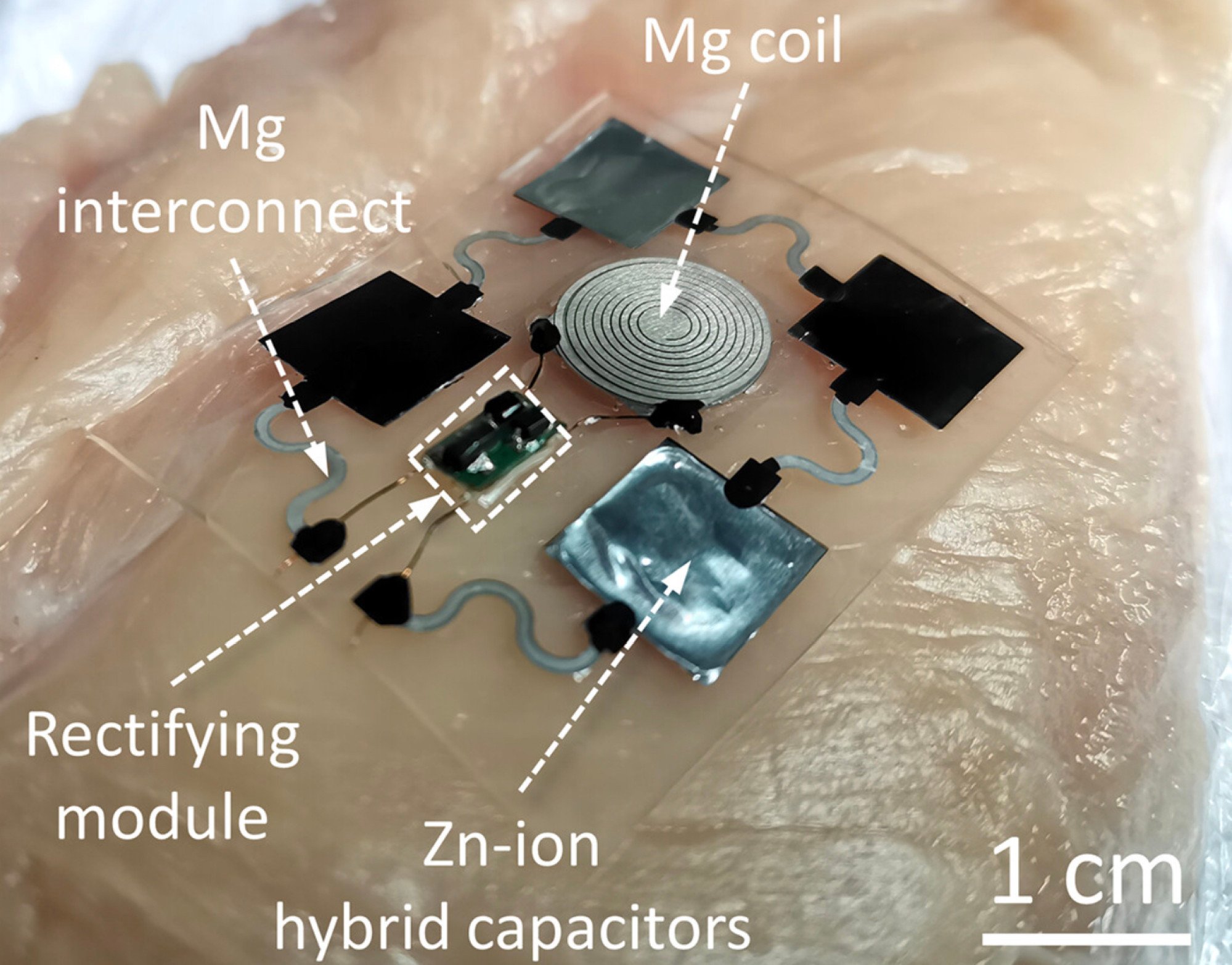
Central to this technology is a magnesium coil that receives power wirelessly from an external transmitting coil placed on the skin. The energy then moves through a circuit into a zinc-ion hybrid supercapacitor energy storage module. Unlike batteries that store chemical energy, supercapacitors hold electrical energy, offering a high power density for consistent energy discharge.


Encased in a biodegradable chip-like implant, the prototype integrates energy harvesting and storage, ensuring a constant power supply to the bioelectronic device it’s connected to. Both magnesium and zinc are crucial to human health, and the researchers have ensured that the device’s materials are in safe quantities, promoting biocompatibility.


Tests in rats demonstrated the device’s efficacy for up to 10 days, with complete dissolution in two months. The duration of functionality can be tailored by altering the encapsulation layer’s thickness and composition. This technology opens avenues for localized, on-demand drug delivery, and therapy directly in various tissues and organs.


To showcase its potential, the scientists connected the power supply with a biodegradable drug delivery device containing anti-inflammatory medicine, implanting it in rats with induced fever. The results were promising; temperatures in rats with the implant were significantly lower than those without, over a 12-hour monitoring period.


While the device currently operates until power exhaustion, the researchers suggest that controlled charging could regulate its activity. Even uncharged, the device showed some passive drug release, indicating its potential as a sustained treatment method.


This prototype marks a crucial step in advancing transient implantable bioelectronic devices, offering effective and reliable energy solutions for a range of medical applications.


Filed under

Written by

Arthur

Tech & Gadgets, MaviGadget

Arthur writes for the MaviGadget Journal, testing the gadgets that promise to change your day and reporting honestly on the ones that actually do.

Shop the edit

More from Gadgets.

$99.95 Press & Go Portable Handheld Garment Steamer Iron
$349.95 Blackout Solar Emergency Light Bluetooth Speaker
Emergency Tools & Kits
$349.95
Emergency Tools & Kits
$89.95 Clean Hands Touchless Slim Bathroom Wastebasket Bin
Trash Cans & Wastebaskets
$89.95
Trash Cans & Wastebaskets
$18.95 Turn Dock Rotating Dashboard Phone Mount Holder
Phone Accessories
$18.95
Phone Accessories