Tech & Gadgets
How Small E-Commerce Brands Are Winning With AI Video Content

How Small E-Commerce Brands Are Winning With AI Video Content
The Visual Content Gap That Small Brands Cannot Ignore
Product video has moved from a nice-to-have to a functional requirement for e-commerce conversion. Platform algorithms on TikTok, Instagram, and YouTube prioritize video content in organic distribution. Shoppers on product pages spend more time with listings that include video and convert at higher rates than those with static images alone. Amazon's data consistently shows that product listings with video outperform comparable listings without it across nearly every category. For large brands with dedicated content production teams, meeting this demand is a budgeted operational function.
For small e-commerce brands — where the founder is often also the photographer, copywriter, social media manager, and customer service representative — producing video content at the volume and quality that competitive positioning requires is a genuine operational challenge. AI video generation is changing what is achievable within those constraints.
Building a Sustainable Video Content System for E-Commerce
The brands that are most effectively using AI video generation are not treating it as a one-off production tool — they are building systematic content production workflows that use AI generation at specific points in the process to multiply output without proportionally increasing time investment.
The foundation of an effective AI video workflow for e-commerce is a well-organized asset library. Product photography, lifestyle imagery, brand color references, and existing video clips should be catalogued and accessible in a format that makes them easy to input into generation tools. The quality of AI-generated output is directly related to the quality of the reference inputs, and brands that invest in organizing their existing assets before building their AI workflow consistently produce better results than those that approach generation with whatever is immediately available.
The second foundation is a prompt template library — a set of tested prompt structures organized by content type (product showcase, lifestyle context, promotional announcement, seasonal campaign) that encode the brand's visual language and have been validated through previous successful generations. Building this library requires an initial investment of time, but it pays dividends in every subsequent production session by reducing the prompt development overhead that slows generation workflows.
Step-by-Step: Producing a Product Video Series With AI
Step 1 — Audit Your Existing Visual Assets
Before generating anything, conduct a thorough audit of your existing visual assets. Identify your highest-quality product photography, your most useful lifestyle imagery, and any existing video clips that could serve as reference inputs or be repurposed within new content. Organize these assets by product category, visual style, and intended use case. This audit typically reveals that most small brands have more usable visual material than they realize — material that can be transformed into video content without any new production work.
Step 2 — Animate Your Product Photography With Motion Tools
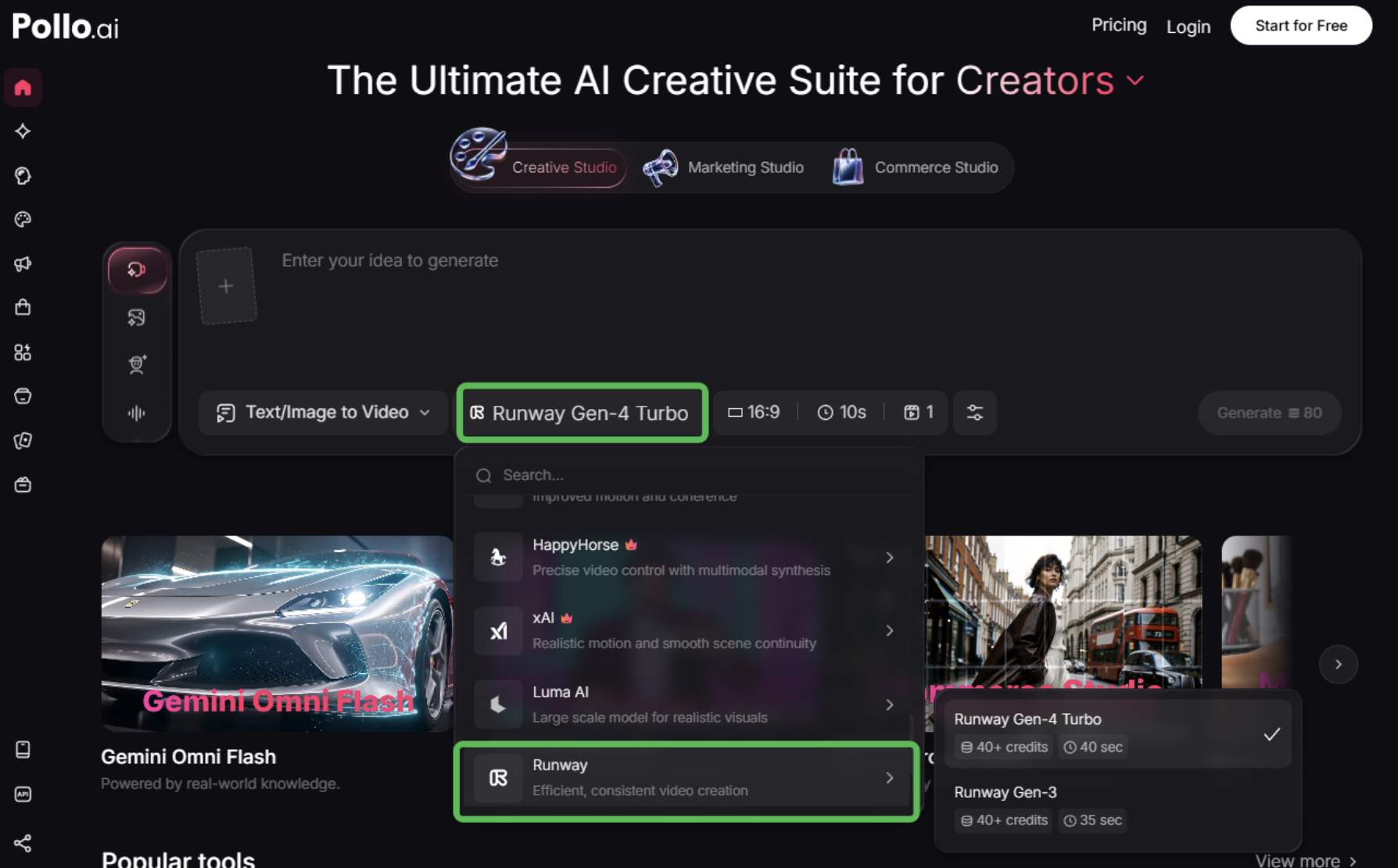
Using Runway within Pollo AI, begin with your strongest product photography and use the image-to-video generation to create dynamic product showcase clips. Apply the motion brush to add specific movement — a slow rotation that reveals the product from multiple angles, a subtle zoom that draws attention to a key feature, a camera drift that places the product in environmental context. These animated product clips are the foundation of your video content library and require no new photography or filming.
Step 3 — Develop Lifestyle and Context Videos
Product showcase clips communicate what a product looks like; lifestyle videos communicate how it fits into a customer's life. For this content type, use text-to-video generation to create scene-based content that places your product category in relevant lifestyle contexts — a kitchen scene for food products, an outdoor setting for athletic gear, a home office environment for productivity tools. These lifestyle clips can be generated from descriptive prompts and combined with your animated product photography to create complete product story videos.
Step 4 — Scale Your Social Content With Preset-Driven Generation
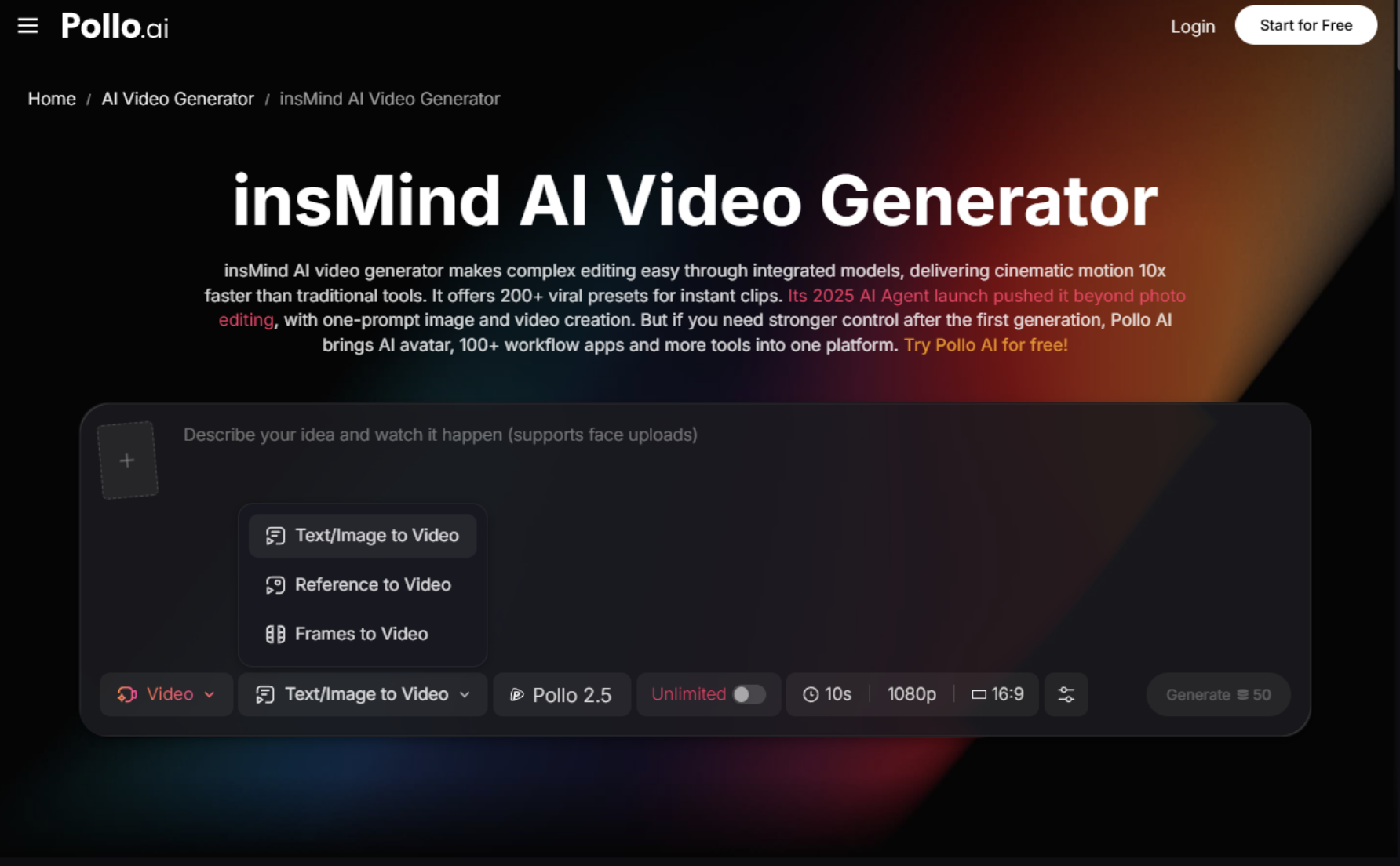
For the high-frequency social content that platform algorithms reward — trend-responsive posts, promotional announcements, seasonal campaigns — tools like insMind AI complement the more controlled generation workflow with speed and variety. The platform's library of over two hundred short-form video presets and effects allows small brand operators to produce visually varied social content at a pace that matches demanding publishing schedules, without spending the creative development time that building each piece of content from scratch would require.
The AI Agent capability is particularly useful for small operations: a single instruction can initiate both image and video creation for a specific product or campaign, reducing the manual steps in the production process. For e-commerce sellers who need to maintain active presence across TikTok, Instagram, and Pinterest simultaneously, this kind of efficient generation workflow is what makes consistent publishing achievable alongside the other demands of running a business.
Step 5 — Build a Content Calendar Around Your Generated Assets
Once you have established a library of generated product videos, lifestyle clips, and social content, organize these assets into a content calendar that plans your publishing schedule three to four weeks in advance. This forward planning allows you to identify gaps — product categories that are underrepresented, content types that are missing, seasonal moments that need specific content — and address them through targeted generation sessions rather than reactive, last-minute production. Brands that operate with a content calendar consistently maintain more consistent publishing cadences than those that produce content reactively.
The Competitive Advantage That Compounds Over Time
The immediate benefit of AI video generation for small e-commerce brands is the ability to produce more content more efficiently. The compounding benefit — which becomes apparent over six to twelve months of consistent use — is the accumulation of a comprehensive visual asset library that covers the full range of products, use cases, and content formats the brand needs.
Large brands have always had this comprehensive asset library because they have the production budget to build it. Small brands have historically operated with whatever assets they could afford to produce, which typically means a thin library that is recycled repeatedly across platforms. AI generation makes it economically feasible for small brands to build the kind of comprehensive visual library that previously required enterprise-level production budgets, and this library becomes more valuable over time as it is expanded and refined.
Conclusion: The Production Gap Is Closing — Start Closing Now
The visual content expectations that e-commerce platforms and consumers have established are not going to decrease. Small brands that find a way to meet those expectations — producing quality video content at the volume and variety that competitive positioning requires — will build the algorithmic visibility and consumer trust that drive sustainable growth. Runway on Pollo AI and complementary tools like insMind AI represent the most accessible path to meeting those expectations that has existed for small brand operators.
The workflow investment required to build an effective AI video production system is real but finite. The competitive advantage it creates compounds indefinitely. Start with your best product photography, animate it into your first video series, and build from there.
Written by
Kevin
Tech & Gadgets, MaviGadget
Kevin writes for the MaviGadget Journal, testing the gadgets that promise to change your day and reporting honestly on the ones that actually do.





