Health & Fitness
Patient Bed Guide: Choosing the Right Home Care Bed
Understand the different types of patient beds for home use, from manual to full-electric, and how to choose the right one for specific needs.
Choosing a patient bed for home care means picking between manual, semi-electric, and full-electric models, each with distinct features and price points. The right bed significantly impacts both patient comfort and caregiver ease, so consider mobility needs, caregiver availability, and budget carefully.
Key takeaways
- Manual patient beds are the most affordable but require physical effort for adjustments.
- Semi-electric beds offer motorized head and foot adjustments, with manual height control.
- Full-electric beds provide complete motorized control for all adjustments, maximizing independence.
- Prices range from about $500 for manual to over $5,000 for advanced full-electric models.
What is a patient bed and why is it important for home care?
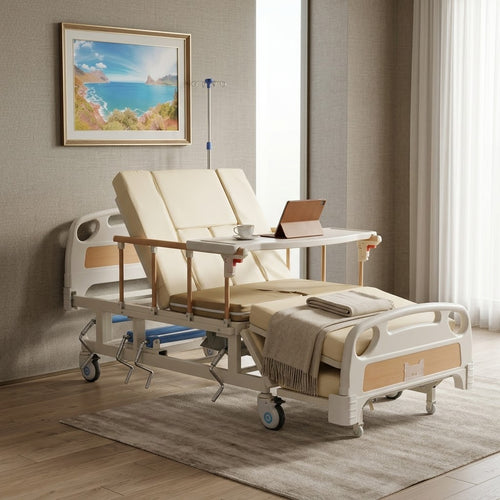
A patient bed, also known as a hospital bed or medical bed, is specifically designed to meet the needs of individuals requiring extended care at home. These beds offer adjustable positions, better support, and enhanced safety features compared to standard beds. They are crucial for improving comfort, preventing complications like bedsores, and making care tasks easier for both the patient and caregiver.
For example, the ability to raise the head of the bed helps with breathing, eating, and reading. Lowering the bed closer to the floor can make transfers safer. Many models also feature side rails to prevent falls. Without a proper patient bed, managing daily care, especially for someone with limited mobility, becomes much more challenging and potentially unsafe.
What are the different types of patient beds?
Patient beds primarily come in three types: manual, semi-electric, and full-electric. Each type offers different levels of automation for adjusting the bed's position and height.
Manual Patient Beds
Manual beds are the most basic and typically the least expensive option. They require a caregiver to physically crank levers to adjust the head, foot, and overall height of the bed.
- Pros: Very affordable (often starting around $500), no electricity needed, reliable.
- Cons: Requires significant physical effort from the caregiver, can be inconvenient for frequent adjustments.
- Best for: Patients with minimal need for position changes or where caregiver strength is not an issue, or in situations without reliable power access.
Semi-Electric Patient Beds
Semi-electric beds offer a middle ground. They use electric motors to adjust the head and foot sections of the bed, controlled by a handheld remote. However, the overall bed height still requires manual cranking.
- Pros: Easier for patients to adjust head and foot independently, reduces some caregiver strain, moderately priced (typically $1,000-$2,000).
- Cons: Still requires manual effort for height adjustments, which can be cumbersome.
- Best for: Patients who need frequent head/foot position changes but whose caregivers can manage occasional height adjustments.
Full-Electric Patient Beds
Full-electric beds are the most advanced and offer complete motorized control over all bed functions: head, foot, and overall height. All adjustments are made with a push of a button on a remote control.
- Pros: Maximum convenience for both patient and caregiver, promotes patient independence, reduces caregiver strain significantly.
- Cons: Most expensive option (ranging from $2,000 to $5,000+), requires a power outlet.
- Best for: Patients with significant mobility limitations, those who need frequent position changes, or caregivers who need to adjust bed height often to prevent back strain.
How do patient beds compare?
| Feature | Manual Patient Bed | Semi-Electric Patient Bed | Full-Electric Patient Bed |
|---|---|---|---|
| Head Adjustment | Manual crank | Electric motor | Electric motor |
| Foot Adjustment | Manual crank | Electric motor | Electric motor |
| Height Adjustment | Manual crank | Manual crank | Electric motor |
| Power Required | No | Yes (for head/foot) | Yes (for all functions) |
| Typical Price | $500 - $1,000 | $1,000 - $2,000 | $2,000 - $5,000+ |
| Caregiver Effort | High | Medium | Low |
| Patient Control | Low | Medium | High |
What other features should you look for?
Beyond the basic type, several other features enhance the utility and safety of a patient bed.
- Bed Size: Most patient beds are twin size (often 36 inches wide by 80 inches long), but wider options like full or queen are available for bariatric patients or those needing more space. Ensure the size fits the room and patient needs.
- Weight Capacity: Standard beds support around 350-450 pounds. Bariatric beds can support 600 pounds or more. Always check the bed's weight limit.
- Side Rails: Essential for preventing falls. Look for half or full rails, and ensure they are easy to raise and lower.
- Mattress Type: Standard foam mattresses are common, but pressure redistribution mattresses (like alternating air or gel-infused foam) are crucial for patients at risk of bedsores. These can add $300 to $1,500 to the total cost.
- Casters/Wheels: Locking wheels are vital for moving the bed safely and then securing it in place.
- Trapeze Bar Attachment: A trapeze bar allows patients to reposition themselves or get in and out of bed with less assistance, promoting independence.
- Trendelenburg/Reverse Trendelenburg: Some advanced beds offer these positions, where the entire bed tilts with the head lower or higher than the feet. This can be medically necessary for certain conditions.
Is buying or renting a patient bed better?
The decision to buy or rent depends on the expected duration of need and your budget.
- Renting: Ideal for short-term recovery (e.g., a few weeks or months) or if you're unsure which type of bed is best. Rental costs vary but can be around $200-$400 per month for a semi-electric bed. Many medical supply companies offer rental services.
- Buying: More cost-effective for long-term needs (six months or more). You own the bed, can customize it, and avoid ongoing rental fees. A new full-electric bed might cost $3,000, which pays for itself in about a year if rental is $250/month.
Consider the long-term prognosis and financial implications. Some insurance plans, including Medicare Part B, may cover a portion of the cost for medically necessary beds.
Common mistakes to avoid when choosing a patient bed
- Underestimating patient needs: Don't just get a basic manual bed if the patient's condition is likely to worsen or if they'll need frequent repositioning. This leads to caregiver strain and potential discomfort.
- Ignoring caregiver input: Caregivers are the ones who will be operating the bed daily. Their physical capabilities and preferences for manual versus electric adjustments are crucial.
- Forgetting about the mattress: The bed frame is only half the equation. A poor mattress can negate the benefits of an adjustable bed and increase the risk of pressure injuries. Always factor in a good pressure redistribution mattress.
- Not measuring the space: Patient beds are larger and heavier than regular beds. Ensure the room has enough space for the bed itself, easy access for caregivers, and room for any other necessary medical equipment. A standard twin patient bed is typically 36" x 88" with the frame.
- Overlooking power requirements: If choosing an electric bed, ensure there's a conveniently located power outlet and consider a battery backup if power outages are a concern.
By carefully considering these factors and understanding the differences between bed types, you can select a patient bed that truly supports the patient's well-being and eases the caregiving process at home.
Written by
Cloe
Health & Fitness, MaviGadget
Cloe writes for the MaviGadget Journal, testing the gadgets that promise to change your day and reporting honestly on the ones that actually do.