Beyond the Shower Head: Your Ultimate Guide to Choosing the Perfect Shower System
How To Choose the Right Shower System for Your Bathroom: A Step-by-Step Guide How To Choose the Right Shower System for Your Bathroom: Your Ultimate Guide Deciding on a new shower system can feel overwhelming with so many options available. But don’t worry! This guide will walk you through everything you need to know, helping […]

How To Choose the Right Shower System for Your Bathroom: Your Ultimate Guide
Deciding on a new shower system can feel overwhelming with so many options available. But don’t worry! This guide will walk you through everything you need to know, helping you confidently choose the right shower system for your bathroom that perfectly matches your needs, style, and budget.
A well-chosen shower system can transform your daily routine, offering comfort, relaxation, and even adding value to your home. Let’s dive in and find your ideal shower setup!
Quick Summary: Your Path to the Perfect Shower System
- Understand Your Needs: Think about who uses the shower and their preferences (e.g., strong spray, soothing rain).
- Consider Your Space: Measure your bathroom and existing plumbing to see what fits and what’s possible.
- Explore System Types: Learn about shower heads, handhelds, body jets, and more to find features you’ll love.
- Set a Budget: Plan for both the system and potential installation costs to avoid surprises.
Step-by-Step Guide: How To Choose the Right Shower System for Your Bathroom
Follow these steps to make an informed decision and ensure you pick the best shower system for your home.
Step 1: Understand Your Showering Habits and Needs
Before you even look at products, think about how your shower is used daily. This is the first crucial step in how to choose the right shower system for your bathroom.
- Who uses the shower? Is it just you, a couple, a family with young children, or elderly individuals? Different users have different needs.
- What’s your ideal shower experience? Do you prefer a quick, invigorating spray or a long, relaxing soak?
- What features are important to you? Do you need easy cleaning for pets, accessibility for someone with limited mobility, or simply a powerful rinse?
- Consider future needs: Are you planning to stay in your home for many years? Think about potential changes in mobility or family size.
Step 2: Evaluate Your Bathroom Size and Existing Plumbing
Your physical space and current setup play a big role in what kind of shower system you can install.
- Measure your shower area: Note the dimensions of your shower stall or bathtub area. This helps determine if a larger rain shower head or a multi-jet system will fit comfortably.
- Check wall space: Some systems, like shower panels, require adequate flat wall space.
- Assess existing plumbing: Are you replacing an old shower, or is it a new installation? Replacing existing systems is often simpler, but major changes might require moving pipes, which adds to cost and complexity. Note the number of water inlets (hot and cold).
- Consider water heater capacity: Multi-head or body jet systems use a lot more hot water. Ensure your water heater can keep up with the demand. (More on this in Step 4).
Step 3: Explore Different Types of Shower Systems and Features
This is where you discover the exciting possibilities! Knowing the various types will help you choose the right shower system for your bathroom’s function and style.
-
Standard Fixed Shower Head
This is the most common type, mounted directly to the wall or ceiling. They offer various spray patterns, from focused streams to wider coverage.
- Pros: Simple, affordable, wide range of styles.
- Best for: Basic showering needs, small bathrooms, budget-conscious projects.
-
Handheld Shower Head
A shower head attached to a flexible hose, allowing you to direct the spray wherever you need it. Often comes with a wall mount.
- Pros: Great for rinsing specific body parts, cleaning the shower, bathing children or pets, and improving accessibility.
- Best for: Families, those needing flexibility, or ease of cleaning.
-
Dual Shower Heads
Combines a fixed shower head with a handheld one, offering the best of both worlds. They can often be used simultaneously or independently.
- Pros: Versatility, caters to different preferences, luxury feel.
- Best for: Couples, households with varied showering preferences.
-
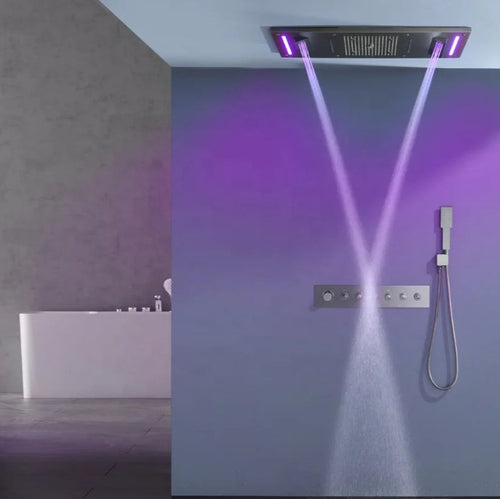
Rainfall Shower Head
Large, often round or square, mounted overhead (like from the ceiling or a long arm from the wall). Mimics the gentle flow of rain.
- Pros: Luxurious, soothing, full-body coverage, spa-like experience.
- Best for: Relaxation, larger showers, modern designs.
-
Body Jets
Small, flush-mounted nozzles installed in the shower walls, spraying water horizontally onto your body. Typically come in sets of 2-6.
- Pros: Hydrotherapy, massage effect, high-end luxury.
- Best for: Large showers, spa enthusiasts, requires good water pressure and capacity.
-
Shower Panels
An all-in-one unit typically mounted on the shower wall. It often includes a fixed shower head, a handheld, body jets, and controls integrated into a single panel.
- Pros: Modern look, easy installation for multi-functionality, space-saving compared to individual components.
- Best for: Contemporary bathrooms, those wanting multiple features without complex plumbing.
-
Thermostatic vs. Pressure-Balancing Valves (The Brains of Your Shower)
- Pressure-Balancing Valve: This valve reacts to changes in hot or cold water pressure (e.g., when someone flushes a toilet). It adjusts the mix to keep the temperature relatively stable, preventing sudden scalding or freezing. It’s a standard safety feature.
- Thermostatic Valve: This more advanced valve maintains a precise, consistent water temperature, regardless of pressure fluctuations. You set your desired temperature, and it stays there. It also often allows you to control water volume independently.
- Pros: Thermostatic offers superior comfort, safety, and precise control. Pressure-balancing is a good, more affordable safety option.
- Best for: Thermostatic for ultimate comfort and luxury; Pressure-balancing for reliable safety on a budget.
-
Digital Showers
These systems use electronic controls to manage temperature, flow, and even timing. Some can be controlled via an app or voice commands.
- Pros: Ultimate precision, pre-set programs, modern convenience, smart home integration.
- Best for: Tech enthusiasts, luxury bathrooms, those seeking ultimate control.
Step 4: Consider Your Home’s Water Pressure and Heater Capacity
This technical aspect is crucial for the performance of your new shower system.
- Test your water pressure: Low water pressure can make multi-jet systems or large rainfall heads feel weak. You can buy a simple pressure gauge to check it, or consult a plumber. Ideal pressure is usually between 40-60 psi (pounds per square inch).
- Evaluate water heater capacity: A standard shower head uses about 2.5 gallons per minute (GPM). If you choose a system with multiple body jets and a rainfall head, your GPM usage could skyrocket, quickly draining your hot water tank. Ensure your water heater (tank or tankless) can handle the increased demand.
-
Solutions for low pressure or capacity:
- Install a pressure booster pump.
- Upgrade to a larger hot water heater or a higher GPM tankless heater.
- Choose a shower system with fewer outlets or low-flow options.
Step 5: Select Style, Finish, and Aesthetics
Once you know what functionality you need, it’s time to make it look great!
- Match your bathroom decor: Consider the overall style of your bathroom – modern, traditional, industrial, farmhouse, etc.
- Choose a finish: Common finishes include polished chrome, brushed nickel, oil-rubbed bronze, matte black, and gold. Pick one that complements your existing fixtures (faucet, cabinet hardware) or creates a deliberate contrast.
- Consider durability: Some finishes are more prone to showing water spots or scratches than others. Chrome and brushed nickel are generally easy to maintain.
Step 6: Set a Realistic Budget
Shower systems vary widely in price, so having a clear budget helps narrow down your choices.
- System cost: Basic fixed shower heads can be under $100, while elaborate digital systems with multiple jets can run into thousands.
- Installation costs: Don’t forget to factor in installation. Simple swaps might be a DIY job, but complex installations (moving pipes, adding new outlets, electrical work for digital systems) will require a professional plumber and potentially an electrician.
- Long-term value: Sometimes, investing a bit more upfront in a durable, water-efficient system can save you money on repairs and utility bills in the long run.
Step 7: Plan for Installation
The final step in how to choose the right shower system for your bathroom is preparing for its arrival.
-
DIY vs. Professional:
- DIY: If you’re only replacing a shower head and valve in the same spot, and you have basic plumbing skills, you might be able to do it yourself.
- Professional: For any new plumbing, moving pipes, installing body jets, or setting up digital systems, hiring a licensed plumber is highly recommended to ensure safety, proper function, and adherence to codes.
- Timeline: Understand that complex installations can take more than a day, and you may be without a functional shower for a period.
Tips & Common Mistakes When Choosing a Shower System
Helpful Tips:
- Read reviews: Always check what other users say about a specific model regarding performance, durability, and ease of cleaning.
- Visit showrooms: Seeing systems in person can give you a better feel for their size, finish, and features.
- Consider water-saving options: Look for WaterSense-labeled products to save water and energy without sacrificing performance.
- Think about maintenance: Some shower heads have rubber nozzles that are easy to wipe clean of mineral buildup.
Common Mistakes to Avoid:
- Ignoring water pressure/heater capacity: The biggest oversight! A powerful system will disappoint if your home can’t support it.
- Forgetting about installation costs: The system itself is only part of the budget.
- Not matching existing finishes: Unless done intentionally, mismatched finishes can make your bathroom look disjointed.
- Prioritizing aesthetics over functionality: A beautiful shower that doesn’t meet your daily needs will quickly become a source of frustration.
- Buying too complex a system for a small space: Overcrowding your shower with too many features can make it feel cramped.
Key Takeaways: How To Choose the Right Shower System for Your Bathroom
- Your ideal shower system blends personal needs, bathroom constraints, and desired features.
- Always check your water pressure and hot water capacity before investing in multi-function systems.
- Thermostatic valves offer superior temperature control and safety.
- Balance aesthetics with practical functionality and your budget.
- When in doubt, consult a professional plumber for advice and installation.
Frequently Asked Questions
What is the easiest way to How To Choose the Right Shower System for Your Bathroom?
The easiest way is to start by identifying your core needs and budget. Prioritize what’s most important to you (e.g., strong pressure, handheld flexibility, smart features) and then explore systems that meet those criteria within your price range. Don’t forget to consider your existing plumbing and water heater capacity early on.
How long does it take to choose and install a new shower system?
Choosing can take anywhere from a few hours to a few weeks, depending on how much research you do. Installation time varies greatly: a simple shower head replacement might take less than an hour for a DIYer, while a complex system requiring new plumbing and electrical work could take professional installers one to three days, or even more for extensive remodels.
Is a thermostatic shower valve really worth the extra cost?
For many, yes. A thermostatic valve offers a more comfortable and safer showering experience by precisely maintaining your desired water temperature, even if other water sources in your home are used. This prevents sudden cold blasts or scalding, making it especially beneficial for families with children or elderly individuals.
Conclusion
By following these steps, you’re well on your way to successfully navigating the options and confidently knowing how to choose the right shower system for your bathroom. Whether you dream of a luxurious spa experience or a simple, efficient setup, a thoughtful approach ensures your new shower will bring joy and functionality to your daily life for years to come. Enjoy your refreshed bathroom!
Looking for more inspiration? Explore the full Mavigadget Gift Ideas Collection for creative solutions.
Filed under
Written by
Cloe
Bed & Bath, MaviGadget
Cloe writes for the MaviGadget Journal, testing the gadgets that promise to change your day and reporting honestly on the ones that actually do.