Auto
What is the Full Meaning of Auto?
The term "auto" is a versatile prefix and standalone word. It primarily means "self" or "by oneself," appearing in words like "automatic" and referring to automobiles.

The term "auto" primarily means "self" or "by oneself," derived from the Ancient Greek word "autos." This fundamental meaning applies whether it's used as a prefix in words like "automatic" or as a standalone shorthand for "automobile," which is a self-propelled vehicle.
Key takeaways:
- "Auto" stems from the Ancient Greek "autos," meaning "self."
- It's a prefix in many words, indicating self-action or self-operation.
- "Auto" is commonly used as a direct abbreviation for "automobile" (a car).
- Its usage spans from linguistics to technology and vehicle classification.
What is the etymological root of "auto"?
The etymological root of "auto" is the Ancient Greek word "autos," which translates directly to "self" or "by oneself." This prefix has been incredibly productive in forming new words across various languages, including English, for centuries. It consistently carries the core idea of something originating from within, acting independently, or relating to the individual. For instance, the word "autograph" literally means "self-written," combining "autos" with "graphos" (writing).
How does "auto" function as a prefix in English words?
As a prefix, "auto" indicates that a noun or verb relates to the self, is self-acting, or is done independently. This is its most common and versatile function in the English language, appearing in hundreds of words. For example, an "automatic" machine performs tasks without human input, literally "self-acting." An "autobiography" is a life story written by the subject themselves, a "self-biography." The concept of "autonomy" refers to self-governance or independence, where a person or entity makes its own rules. Think of "autofocus" on a camera, which adjusts the lens itself, or "auto-correct" on your phone, which fixes typos automatically.
When does "auto" specifically refer to a car?
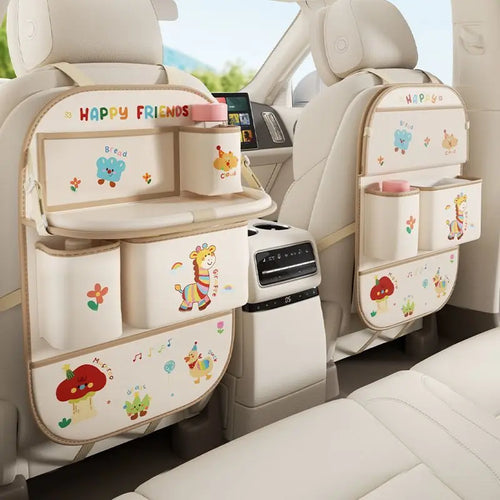
"Auto" specifically refers to a car when it's used as a shortened form of "automobile." The word "automobile" itself is a combination of the Greek "autos" (self) and the Latin "mobilis" (moving), meaning "self-moving." This term was coined in the late 19th century to describe the new class of vehicles that propelled themselves, distinguishing them from horse-drawn carriages or other non-motorized transport. Today, "auto" is a very common informal and formal shorthand for a car, especially in phrases like "auto insurance," "auto repair shop," or "auto industry." For example, the average car in the US in 2023 weighs around 4,000 pounds, a significant piece of "auto" equipment.
What are some common examples of "auto" in everyday language and technology?
In everyday language and technology, "auto" frequently appears to denote self-operation or automation. Beyond cars, you encounter it constantly. In photography, "auto mode" lets the camera decide settings like aperture and shutter speed. On your phone, "auto-brightness" adjusts the screen based on ambient light. When filling out online forms, "autofill" suggestions pop up. Even in music, "autotune" automatically corrects vocal pitch. These are all instances where a system or device handles a function without direct human intervention, streamlining processes.
Here's a quick look at some common "auto" words and their core meaning:
| Word | Meaning | Core "Auto" Concept |
|---|---|---|
| Automatic | Operating by itself | Self-acting |
| Autobiography | A life story written by oneself | Self-written |
| Autonomy | Self-governance; independence | Self-rule |
| Autofocus | Lens adjusts focus automatically | Self-adjusting |
| Autopilot | System guiding an aircraft or vessel itself | Self-guiding |
| Autograph | A person's own signature | Self-written |
| Automobile | A self-propelled vehicle (car) | Self-moving |
Is "auto" used differently in specific industries or fields?
Yes, "auto" takes on specialized meanings in various industries, though always retaining its core "self" concept. In the "auto industry," it exclusively refers to the manufacturing, sales, and service of automobiles. In computing, "auto-start" or "auto-run" describe programs that launch automatically. In biology, an "autotroph" is an organism that produces its own food, like plants using photosynthesis. In medicine, "autoimmune" diseases involve the body's immune system attacking its own tissues. Each field adapts the "self" idea to its specific context, making the term incredibly versatile.
What's the main takeaway about the full meaning of "auto"?
The main takeaway is that "auto" is a powerful and flexible linguistic element. Its full meaning isn't just "car," even though that's a very common usage. Fundamentally, it's about "self" or "by oneself." Understanding this Greek root helps decode hundreds of words and appreciate how different fields borrow this concept to describe self-action, self-regulation, or self-propulsion. So, whether you're talking about an automatic door or an automobile, the underlying principle of independent action is always there.
Photo by CHUTTERSNAP on Unsplash
Geschrieben von
Matt
Auto, MaviGadget
Matt schreibt für das MaviGadget Journal, testet die Gadgets, die versprechen, Ihren Tag zu verändern, und berichtet ehrlich über diejenigen, die es tatsächlich tun.