How Taking Breaks Can Help You Be More Productive When Working From Home
Image Credit. When you’ve got deadlines looming, the logical thing might be to try to spend as much time actually working as possible, especially if you work for yourself. The less time you spend messing around between projects, the more money you earn per hour. So, you need to work flat-out all the time, right? […]


When you’ve got deadlines looming, the logical thing might be to try to spend as much time actually working as possible, especially if you work for yourself. The less time you spend messing around between projects, the more money you earn per hour. So, you need to work flat-out all the time, right?
Well, not necessarily.
The problem with humans is that we are only human, with all the limitations and quirks that humanity comes with. While a robot might be able to work tirelessly, we aren’t so lucky. We don’t just like to take breaks; we actually need breaks to be more effective and productive.
Why Breaks Matter
So, what is the actual benefit of taking breaks?
Well, taking regular breaks at work is vital for preventing issues like burnout and even physical discomfort. Breaks are better for your health, but they can even benefit your workflow throughout the day.
If you try to work without breaks, you may get tired much more quickly. This can lead to issues with concentration and focus, and the dreaded blank screen problem, where you spend more time staring at the screen than actually working.
Breaks can encourage more creative thinking and help you work through problems passively. Sometimes, looking at a problem with fresh eyes a few minutes later can make it much easier to solve, rather than trying to brute force it with time.
Without breaks, you may end up with decision fatigue and you can find it harder to stay motivated on a task. So, use regular breaks to allow you to concentrate more deeply for short bursts.
Scheduling Breaks and Productivity Techniques
Research has often found that short, regular breaks after bursts of focused work are much more effective than taking breaks as and when you remember to.
The first technique to use is to actually add breaks into your schedule. This prevents you from working through a bunch of breaks and potentially getting burned out or finding that you need ot take a longer break because you’re more tired. By adding breaks, you can take them at set times, and you will also go back to work at set times.
Some techniques involve being very specific with the amount of time you spend working and taking breaks.
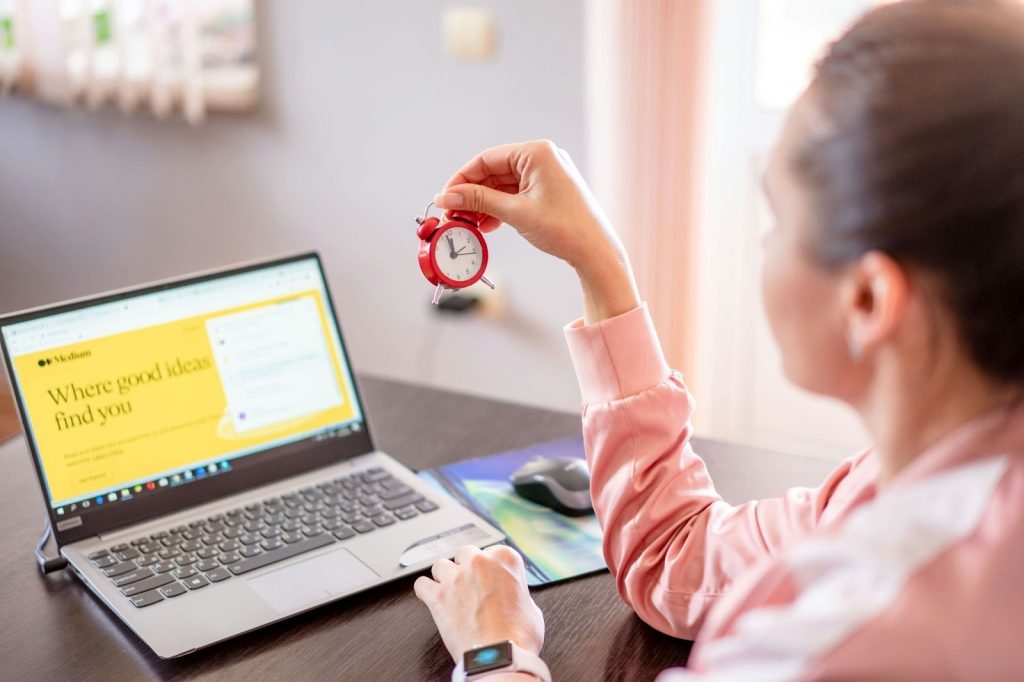
The Pomodoro technique, for example, involves using a timer and working for 25-minute intervals and taking a 5-minute break after each work session. After four of these sessions, you take a longer break. Some people find these short bursts of activity work well, but you can change the interval time to suit your needs and preferences more.
Another technique is time blocking, which is essentially a way to schedule your tasks so you’re focused on one type of activity at a time in a certain time block, rather than stopping and starting different tasks throughout the day.
So, now that you’re ready to take breaks, what do you actually do during these break times?
Moving About During Your Break
One of the most important things you can do during your break is to get up and move. Spending hours at a time sitting at a desk is terrible for your health. It can be bad for your joints, your cardiovascular system, and can lead to back pain, neck stiffness, eye strain, headaches, and other issues.
So, even if you only have a few minutes, get up and move. Even just walking around the house or the office can be helpful. Go to the bathroom, get a drink or a small snack, whatever allows you to give yourself an excuse to walk around.
Another great way to move around during your break is to do some stretches. The simplest stretch doesn’t even require getting up. But you can reduce eye strain by looking at a point in the middle distance for a few seconds, allowing your eyes to relax and reset after staring at a screen.
Otherwise, get up and do a few stretches to loosen your muscles. Stretch your back and your limbs, especially, because they can seize up after a few hours of work.
Keeping Your Mind Active
Another important thing to do is to keep your mind active but engaged in something other than work. If you just switch tasks, you aren’t getting a break, and if you just scroll through social media for the full five minutes, you won’t benefit either.
There are a few ways you can keep your mind busy without stressing it out. Puzzle games or card games like solitaire are great ways to break up your day, as you can play a short game, think about something else for a while, and keep yourself entertained.
Another good thing to do is to talk to someone. Speak to a colleague about something non-work related or, if you’re at home, chat to a family member. Even spending time with a pet can be helpful.
What to Do During Longer Breaks
So far, we’ve mostly talked about what to do during short breaks. But what about breaks that go on for about an hour or longer?
One option, which can sound odd, is to take a power nap. Naps can be really good for your cognitive abilities and can reset and rest your brain. However, a nap in the middle of the workday isn’t for the faint of heart. You should give yourself enough time to sleep for a full 45-minute sleep cycle, but you also don’t want to nap forever. Still, if you have the flexibility to do so, this can be a good way to refresh yourself.
You can also go for a short walk outside the building. This keeps you active and gives you some fresh air. It’s also much better than having a break by staring at another screen for half an hour or so. If you prefer, you could sit with a book for a few chapters or try to do something creative with your time.
Filed under
Written by
Cloe
Home & Kitchen, MaviGadget
Cloe writes for the MaviGadget Journal, testing the gadgets that promise to change your day and reporting honestly on the ones that actually do.